Factory Producing iPhone Charging Cables for Export in Vietnam
Factory Producing iPhone Charging Cables for Export in Vietnam

The increasing demand for iPhone usage has led to the strong development of the accompanying accessory industry. In particular, the charging cable is not simply an electrical wire but a complex technological complex. This article will delve into the sophisticated operating principles of genuine iPhone charging cables, especially those that meet export standards, and at the same time review the role of MyMy Technology factory in Vietnam in the global supply chain.
Vietnam Supply Chain: Where iPhone Charging Cables Are Produced for Export
Currently, Vietnam has become an important manufacturing center in the supply chain of Apple and its major partners. Although the factories that directly produce Lightning/USB-C cables for export to Apple (OEM) often keep information confidential, some Vietnamese enterprises have affirmed their position in the production of charging components and accessories international standards:
- Participation of Vietnamese Enterprises:Companies likeSHDC(participating in the production of charging components for Apple partners) and MyMy Technology (production of high-quality PD fast chargers) is proof that "Made in Vietnam" production capacity has met the most stringent standards.
- Export Standards:Factories in Vietnam that want to participate in the Apple supply chain (even third-party accessories) must strictly comply with regulations on material quality, fire resistance, and especially must be licensed.MFi certification (Made For iPhone/iPad/iPod).
Principle of Power Transmission in Charging Cable
The basic principle of the iPhone charging cable is to transmit direct current (DC)from the charger to the device's battery. However, this process is tightly controlled by technology:
1. Copper Core Current and Voltage Control
Electric currentcopper coreHigh quality inside cable. Genuine cable uses pure copper with extremely low resistance.
- Principle of Resistance Reduction:To increase charging speed and efficiency, manufacturers have to reduce resistance of the wire. Low resistance helpsreduce energy loss in the form of heat, allowing current (Amperes) to pass through more easily, especially important when charging at high power.
- Voltage Control Circuit:The cable acts as a bridge, but the control of voltage and current is primarily done through communication between smart chips in cable (MFi), charger and Power Management Unit (PMIC) of the iPhone.
2. Relationship Between Cable – Charger – Device
This is one closed electrical system where three components constantly communicate:
- Charger (Adapter):Provides input power and has the ability to adjust the voltage (e.g. from 5V to 9V, 12V) as required by the device.
- Cable:As a transmission channel, it confirms the load capacity and communicates via MFi chip.
- Device (iPhone):PMIC is the "brain"requestCharging power level is based on battery condition, temperature, and safety. All three must "agree" on the Ampere and Volt level before charging begins.
Power Delivery (PD) Communication and Fast Charging MyMy Technology
The biggest difference between a regular charging cable and a genuine iPhone cable lies in the ability to communicate and self-adjust charging power.
1. MFi Chip and Device Recognition Mechanism
- MFi Chip in Lightning/USB-C Cable Head:This is an authentication chip provided by Apple, located at the end of the cable. The MFi chip contains a unique digital code that acts as a "key" to:
- Confirm validity of cable with iPhone.
- Information transmission on the charging and data capabilities of the cable.
- The "Handshake" process:When connected, the iPhone and MFi chip perform digital communication to cable type identification and agreeThe safest and most optimal power level to start charging.
2. Power Delivery (PD) Fast Charging Technology
- PD Principle:PD is a fast charging protocol that uses the portUSB-C. It allows the device and charger to negotiate to increase the voltage to a level higher than 5V (usually 9V or 12V) to transmit large power (20W, 30W, 65W...).
- The Difference Between 5V and PD 20W:
- Normal Charging (5V):Fixed voltage 5V, low current (Ampere) (1A - 2.4A). Maximum power about 12W.
- 20W PD Charging:The voltage is increased Volts and Ampere about 2.22A for a total power of 20W. Increasing the voltage is the key factor to increase the charging speed.
- Effects of Smart Chip Controlling Ampere:During charging, PMIC and smart chip continuously monitor and adjust current intensity (Ampere), making sure it is always at a safe level for the battery, especially when the battery is almost full.
Battery Safety and Temperature Protection
Safety is the most important factor that contributes to the stability of genuine iPhone charging cables.
1. Safe Charging Cycle
iPhone Lithium-ion batteries charge in three stages to optimize longevity:
- Constant Current (CC) Phase:Fastest charge, high current, to about 80% capacity.
- Constant Voltage (CV) Phase:Gradually reduce the current (Amperes), maintaining high voltage until the battery reaches 100%.
- Trickle Charge Phase:When the battery is full, the system switches to micro-charging mode, providing only enough current to maintain 100% capacity.
2. Overheat Protection and Automatic Shut-off When Battery Full
- Overheat Protection:iPhone temperature sensor inside the battery. If the temperature exceeds a safe threshold (usually 45°C), the PMIC will automatically reduce or pause charging until the temperature drops, protecting the battery from damage.
- Automatic Shut-off Control Circuit:When the battery reaches 100%, the PMIC will command the chargerstop transmitting electricity or switch to maintenance charging. Essentially, the device will automatically “isolate” the battery from the power source, eliminating the risk of overcharging.
Bidirectional Data Transmission in Cable
The iPhone charging cable not only transmits power but also transmits data, thanks to its complex structure:
1. Simultaneous Data and Power Transmission
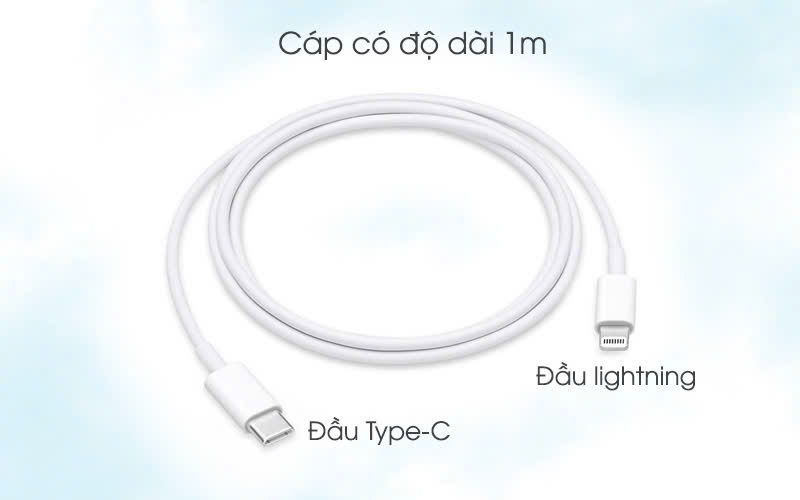
Lightning cable has8 pinsThese pins are designed to serve both power transmission (VCC/Ground) andData Pins. Data and power transmission are performed via separate protocols over functionally separated cores.
2. Bidirectional Data Principle
Data is transmitted in the form of electrical signal(electrical pulses) through the data cores. These signals are two-way, allowing data to be transferred from iPhone to computer (sync, backup) and vice versa (update software, receive control commands) via transmission protocols such as USB.
VI. Why Are Genuine Charging Cables More Stable Than Counterfeit Products?
Stability and safety are the reasons why MFi charging cables are worth more:
|
|
|
|
|
|
|
|
|
|
|
|
|
|
|
|
|
|
|
|
In short, the iPhone charging cable is a high-tech component. When choosing to buy, prioritize the product genuine or MFi certified is the smart choice to ensure safety, optimize charging speed (especially 20W PD technology), and protect battery life for your device.
Factory Producing iPhone Charging Cables for Export in Vietnam