iPhone Charger Manufacturing Plant in Vietnam
iPhone Charger Manufacturing Plant in Vietnam
In the Apple device ecosystem, the iPhone charger plays a crucial intermediary role between the power source and the device's battery. More than just converting voltage, the charger also regulates current, controls heat, and protects the battery during charging. Understanding the structure and operating principles of an iPhone charger helps users choose the right product and avoid potential risks during long-term use.
Basic Structure of an iPhone Charger - MyMy Technology
A standard iPhone charger is typically composed of several main components: an insulating casing, a power conversion circuit, control components, and a safety protection system. The casing is made of heat-resistant, insulating plastic, which protects the internal components and isolates the user from the power source. Inside is the charging circuit, where the voltage is converted from alternating current to direct current suitable for the iPhone. In addition, there are smaller components such as capacitors, inductors, diodes, and control chips, all working together to ensure a stable and safe output current.
How Does the Charging Circuit Inside an iPhone Charger Work? - MyMy Technology
The charging circuit inside an iPhone charger operates on the principle of voltage conversion and regulation. When plugged into a power source, alternating current is rectified into direct current, then passed through a control circuit to reduce the voltage to a level suitable for the device. This circuit continuously monitors the iPhone's battery status through communication with the charging cable, thereby adjusting the output current at each stage of charging. Thanks to this mechanism, the charger does not provide a fixed power supply but always changes dynamically to ensure charging efficiency and safety.
Components Determine the Durability and Safety of a Charger - MyMy Technology
The durability and safety of an iPhone charger depend heavily on the quality of its internal components. Key components include filter capacitors to stabilize the current, noise-reducing inductors, rectifier diodes, and especially the power management chip. If the components are of poor quality, the charger is prone to overheating, unstable charging, or even short circuits and fires. Conversely, a charger using standard components will operate stably for a long time, reduce battery wear, and minimize risks to the device.
Principles of Current Regulation in iPhone Chargers - MyMy Technology
iPhone chargers don't deliver maximum current right from the start; instead, they apply a phased current regulation principle. When the battery is low, the charger allows a higher current to speed up charging. As the battery level increases, the current is reduced to control heat and protect the battery. Near full charge, the current is very low, prioritizing stability over speed. This principle helps iPhone batteries maintain a longer lifespan and reduces battery degradation over long-term use.
How does the iPhone fast charging mechanism work?
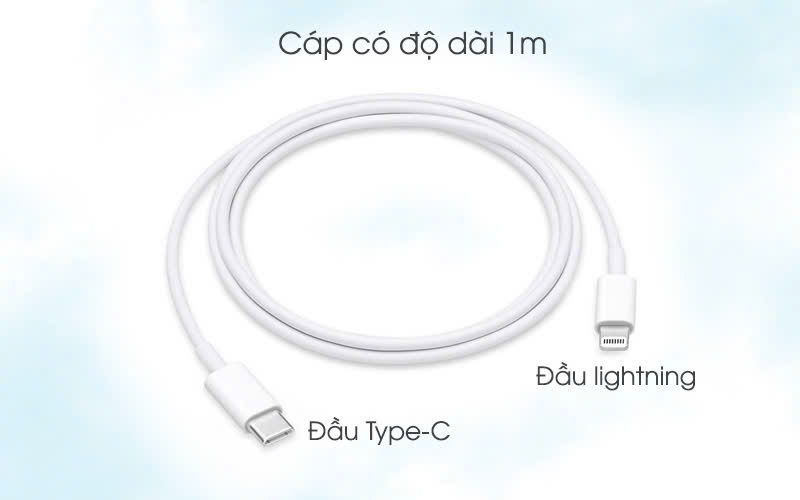
Fast charging on iPhones works by coordinating the charger, charging cable, and the device. When the iPhone recognizes that the charger and cable support fast charging, the system allows for increased input power during the initial charging phase. At this time, the internal circuitry of the charger increases the current but remains within the designed safety limits. This process allows the iPhone to reach approximately 50-60% battery charge in a short time, after which the charging speed gradually decreases to protect the battery.
Appropriate Power Output for Each Generation of iPhone
Each generation of iPhone has a different appropriate charging power level, depending on battery capacity and hardware design. Newer iPhone models generally support higher charging power than older generations; however, this doesn't mean that using a higher wattage charger is always better. Using a charger with the appropriate wattage ensures fast and stable charging without putting excessive strain on the battery. A standard charger will automatically adjust its output power to suit each connected device.
The Difference Between a Regular Charger and a Fast Charger - MyMy Technology
The biggest difference between a regular charger and a fast charger lies in the control circuit and current delivery capabilities. Regular chargers have a simpler design, lower power output, and longer charging times, but require fewer components. Fast chargers, on the other hand, require a more complex control circuit, higher-load components, and better temperature control. Using a low-quality fast charger carries a higher risk of overheating and battery damage compared to using a standard, high-quality charger.
Does Fast Charging Harm iPhone Batteries?
Essentially, fast charging doesn't harm iPhone batteries if the charger and cable meet technical standards. Problems usually arise from using chargers of unknown origin, with poor quality components, or unstable control circuits. In such cases, poorly controlled current generates excess heat, which over time affects battery lifespan. Conversely, properly designed fast charging balances speed and safety, saving users time while protecting their devices.
Overheating and Overcurrent Protection Capabilities of the Charger
A high-quality iPhone charger is always equipped with safety mechanisms such as overheat protection, overcurrent protection, and short-circuit protection. When the temperature rises abnormally or the current exceeds safe limits, the protection circuit will automatically reduce power or cut off the power supply. This is an extremely important factor in minimizing the risk of fire and explosion and protecting the device in situations of continuous use or high-temperature environments.
Conclude
An iPhone charger is not just a simple accessory, but an electronic device with a complex structure and operating principle. Understanding its structure, fast charging mechanism, and protection features helps users choose the right product, use it safely, and extend battery life MyMy Technology charger manufacturingt In a market with many different types of chargers, prioritizing products that are technically sound and have good current and temperature control is key to ensuring a stable and long-lasting charging experience.